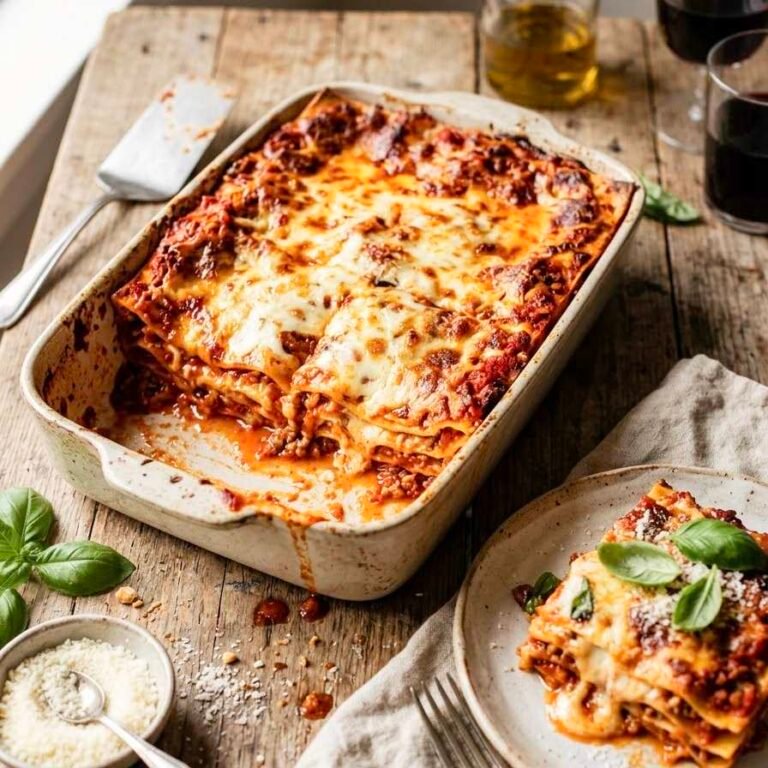


If you’re craving the coziest comfort food known to humankind, you’ve found it. This cheese macaroni delivers a velvety, golden, ultra-cheesy pasta bake that’s crisp on top and gooey in the middle — and we’re not just giving you the recipe, we’re taking you behind the scenes of the one step that makes or breaks it all: the cheese sauce.
Why You’ll Love This Recipe
- Ready in about 40 minutes — perfect for weeknights
- Made with simple pantry staples
- Fully customizable — swap cheeses, add proteins, or keep it classic
- Kid-approved and crowd-pleasing
Ingredients
For the Pasta & Cheese Sauce
| Ingredient | Amount |
|---|---|
| Elbow macaroni | 2 cups (about 8 oz / 225 g) |
| Butter, unsalted | 3 tbsp |
| All-purpose flour | 3 tbsp |
| Whole milk (warm) | 2½ cups |
| Sharp cheddar cheese, shredded | 2 cups |
| Gruyère or mozzarella, shredded | 1 cup |
| Cream cheese | 2 tbsp |
| Salt | 1 tsp (or to taste) |
| Black pepper | ½ tsp |
| Garlic powder | ½ tsp |
| Mustard powder (or Dijon) | ½ tsp |
| Paprika (smoked, optional) | ¼ tsp |
For the Topping (Optional but Recommended)
| Ingredient | Amount |
|---|---|
| Panko breadcrumbs | ½ cup |
| Grated Parmesan | ¼ cup |
| Melted butter | 1 tbsp |
Pro tip: Always shred your own cheese. Pre-shredded cheese contains anti-caking agents that can make your sauce grainy instead of silky.
Step 1: Cook the Pasta
- Bring a large pot of salted water to a rolling boil.
- Add the elbow macaroni and cook 1–2 minutes shy of al dente (usually 6–7 minutes). It will finish cooking in the oven.
- Drain and set aside. Do not rinse — the starch helps the sauce cling.
Step 2: Make the Roux
- In the same pot, melt 3 tbsp butter over medium heat.
- Whisk in 3 tbsp flour and cook for 1–2 minutes, stirring constantly. You want it golden and fragrant, not brown. This cooks out the raw flour taste.
Step 3: Build the Cheese Sauce — The Heart of the Recipe
If the roux is the foundation, the cheese sauce is the soul of your mac and cheese. This is where most recipes go wrong — grainy, greasy, or bland sauce almost always traces back to mistakes made right here. Master this step and you’ve effectively mastered the entire dish.
The Science: Why Cheese Sauce Breaks
Cheese is a fragile emulsion — each shred contains fat droplets and milk proteins held together by calcium. When heated too aggressively:
- The fat separates → greasy, oily puddles
- The proteins tighten and clump → grainy, gritty texture
Your job is to melt the cheese gently so that emulsion stays intact. Every technique below serves that one goal.
Add the Milk — Slowly, Whisking Constantly
- Warm the milk first. Cold milk hitting a hot roux shocks it and creates lumps. Warm it for 60–90 seconds in the microwave while the roux cooks.
- Pour gradually — ½ cup at a time. Whisk until completely smooth before adding more. The first additions will look thick and paste-like; that’s normal.
- Why gradual works: Adding liquid slowly lets the starch granules in the roux hydrate evenly. Dump it all in at once and the starch clumps before it can disperse.
- Simmer 3–4 minutes, whisking occasionally, until the sauce thickens. Do the line test: dip a spoon, run your finger across the back — if the line holds without the sauce running into it, you’re ready for cheese.
Lumps anyway? Don’t panic. Whisk vigorously for 30 seconds, or blitz briefly with an immersion blender. Smooth as new.
The Seasoning Window
Add the cream cheese, garlic powder, mustard powder, paprika, salt, and pepper while the sauce is still on the heat — before the cheese goes in. Here’s why:
- Mustard powder is the secret MVP. It doesn’t make the dish taste like mustard — it sharpens and amplifies the cheddar’s tang, the same way a little acid makes a sauce sing.
- Paprika adds warmth and that golden color everyone associates with classic mac.
- Seasoning before the cheese matters because cheddar is already salty — season after, and you risk overshooting.
The Cheese-Melting Method — The Most Important Part
This is where recipes live or die. Follow these rules exactly:
- Kill the heat. Once the sauce is seasoned, remove the pot from the burner entirely. Residual heat is enough to melt cheese — direct heat is the #1 cause of grainy sauce.
- Add cheese in small handfuls — roughly ½ cup at a time, stirring until completely melted before the next addition. It takes barely 2 minutes total, and it guarantees a smooth, glossy sauce.
- Stir in a figure-eight pattern to keep the sauce moving across the whole pan base without whipping in air.
- Grate it fresh. Block cheese melts cleanly; pre-shredded is coated in cellulose and potato starch that resist melting and make sauce gluey or gritty.
Know Your Cheese Lineup
| Cheese | Role in the Sauce |
|---|---|
| Sharp cheddar | The classic flavor backbone — tangy, bold, unmistakably “mac and cheese” |
| Gruyère | The melter — creates restaurant-level stretch and nutty depth |
| Mozzarella | Gruyère substitute — maximum stretch, milder flavor |
| Cream cheese | The bodyguard — its stabilizers keep the emulsion silky, even after reheating |
| Parmesan (topping only) | Salty, savory crunch — but never in the sauce; it’s a “stringy” melter |
Avoid in the sauce: Swiss (gets stringy), processed “cheese product” (waxy flavor), and large amounts of hard aged cheeses — they seize instead of melt.
Troubleshooting the Sauce
| Symptom | Cause | Fix |
|---|---|---|
| Grainy / gritty | Cheese melted over too much heat, or pre-shredded cheese | Whisk in 1–2 tbsp cream cheese or a splash of warm milk; lower heat next time |
| Greasy, oily layer | Sauce boiled or cheese broke | Off the heat, whisk hard; stir in a small splash of warm milk to re-emulsify |
| Too thick | Over-reduced | Whisk in warm milk, 2 tbsp at a time |
| Too thin | Under-simmered | Simmer a few more minutes, stirring |
| Bland | Under-seasoned or mild cheese | More mustard powder and salt first; sharper cheddar second |
| Lumpy (flour lumps) | Cold milk added too fast | Strain through a fine sieve or blitz with an immersion blender |
The Visual Checklist Before Moving On
Your sauce is ready when it is:
- Glossy — it should shine, not look matte or dull
- Smooth — no visible shreds, no oil on the surface
- Pourable but thick — it should ribbon off a spoon
- Tastes slightly too seasoned on its own — the pasta will absorb and mute it in the oven
Make-ahead note: You can make this sauce up to a day ahead. Cool quickly, press plastic wrap directly onto the surface (prevents skin forming), and refrigerate. Reheat gently over low heat with a splash of milk — the cream cheese is what lets it come back together without breaking.
Step 4: Combine
- Fold the drained macaroni into the sauce until every piece is coated.
- Taste and adjust the seasoning — this is your last easy chance.
Step 5: Bake
- Preheat your oven to 375°F (190°C).
- Transfer the mac and cheese to a greased 9×13-inch (or 2-quart) baking dish.
- Mix the panko, Parmesan, and melted butter, then sprinkle evenly over the top.
- Bake for 15–20 minutes, until bubbly at the edges and golden on top.
Step 6: Rest and Serve
Let it sit for 5 minutes before serving — the sauce thickens to the perfect spoonable consistency.
Delicious Variations
- Bacon Lover’s: Fold in 6 slices of crispy, crumbled bacon before baking.
- Spicy Kick: Add ¼ tsp cayenne or diced jalapeños with the milk.
- Veggie Boost: Stir in steamed broccoli, peas, or roasted cherry tomatoes.
- Truffle Luxe: Drizzle a little truffle oil over the finished dish.
- Stovetop Only: Skip the baking step entirely — it’s still incredible straight from the pot.
Storage & Reheating
- Fridge: Airtight container, up to 4 days.
- Freezer: Freeze (before baking is best) for up to 2 months; thaw overnight in the fridge.
- Reheating: Add a splash of milk and reheat gently on the stovetop or in the oven at 350°F. The milk brings the creaminess back to life.
Frequently Asked Questions
Can I use a different pasta shape?
Absolutely. Shells, cavatappi, or penne hold sauce beautifully — just cook to just-under al dente.
Can I make it gluten-free?
Yes — use gluten-free pasta and swap the flour for a gluten-free blend or a cornstarch slurry (1 tbsp cornstarch mixed with 2 tbsp cold milk).
Why is my sauce grainy?
Almost always high heat or pre-shredded cheese. Melt gently, grate fresh, and it’ll stay silky every time.
Can I skip the baking step?
Yes! The stovetop version is ready in under 20 minutes and just as creamy.
Final Thoughts
This cheese macaroni is more than a recipe — it’s a warm hug on a plate. The techniques in Step 3 are the real treasure: once you understand why the sauce breaks and how to protect it, every cheese sauce you make from here on — from nacho cheese to mornay — becomes foolproof.
If you try this recipe, leave a comment below and tell me your favorite cheese combo — I read every single one!
Happy cooking! 🧀
Prep time: 10 min | Cook time: 30 min | Serves: 4–6